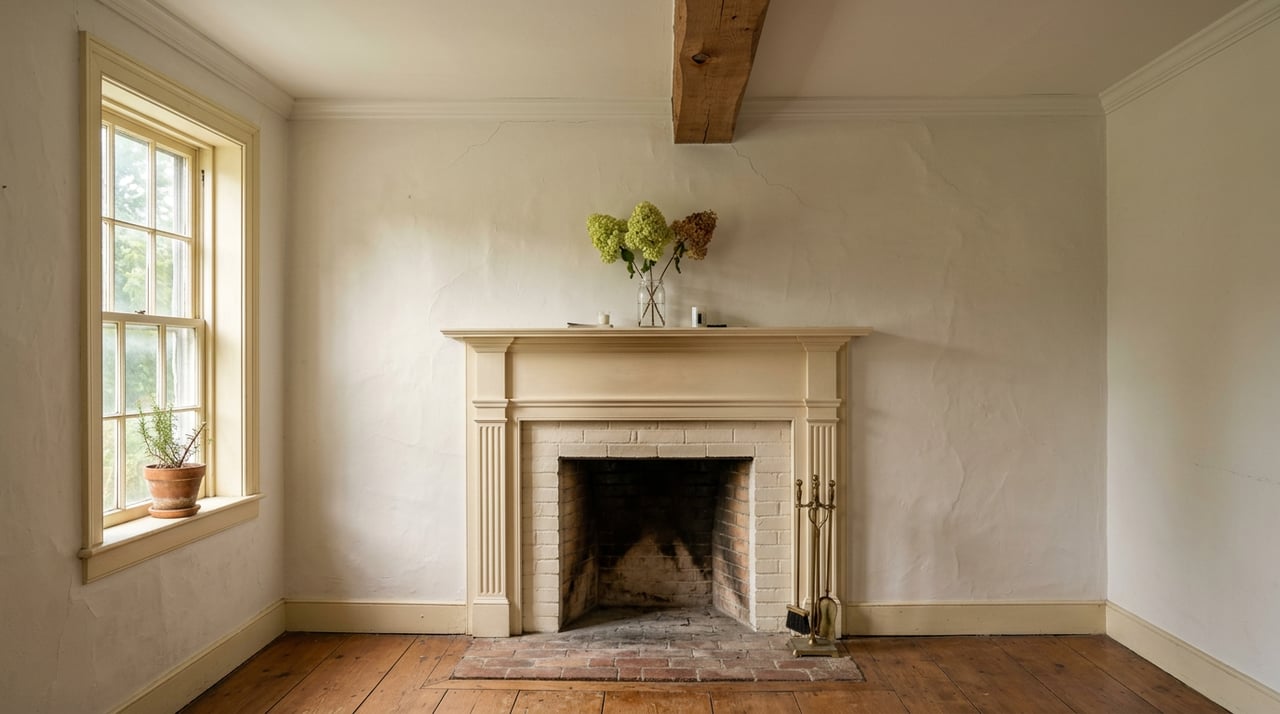
Say you're looking at an older cottage in Greenport, listed as a fixer-upper with real bones and a price that seems low for the village. Before you ask what it's worth, ask a different question: can you tear it down and start over if the renovation math doesn't work?
The answer depends on a line that runs through the village and that the Village Board may soon erase. Right now, that line separates the roughly quarter of Greenport's buildings inside the local historic district from the majority outside it. A proposed village-wide expansion could move it, and depending on which side of it a property sits, the same "as-is" listing means something very different for your renovation budget and timeline.
The Line That Currently Covers About a Quarter of the Village
Greenport has had a local historic district since 1988. In early 2025, the village added the 27 properties of Sandy Beach, bringing the protected total to 291 buildings, mostly concentrated along Main Street, Carpenter Street, First Street, and the harbor-facing blocks that make up the village's original commercial and residential core, according to The Suffolk Times. That leaves roughly 809 parcels, or about three-quarters of the village, outside the district.
Inside the district, the process is more deliberate but not necessarily more expensive. The Historic Preservation Commission review typically adds about 30 days to the timeline, according to the same Suffolk Times piece. Because the preferred materials for a Greenport house are largely the same materials builders already use, HPC review doesn't generally add cost. What it does add is a second set of eyes asking whether a project fits the scale and character of its block.
That distinction, the local historic district versus the rest of the village, is the whole story right now. Two separate processes are underway.
Two Processes With Different Consequences
The Local District Could Go Village-Wide
According to North Fork Sun, since March 2025, the Historic Preservation Commission, chaired by Janice Claudio, has been building a case to extend the local district to cover all roughly 1,100 parcels in the village, not just the current 291. The commission held public sessions, including one at Floyd Memorial Library in May 2025, where about two dozen residents attended in person and roughly 100 more watched by livestream. Claudio has also proposed softening the process along the way: dropping the commission's oversight of residential paint colors and splitting applications into "minor" and "major" tracks so small projects move faster, even as the application fee rises from $50 to $100.
Claudio has been direct about the target. Rising land values have made it cheaper, in some cases, to demolish an older home and rebuild quickly for resale than to renovate it. According to North Fork Sun, Claudio has called the proposal "a seat belt." As of the most recent public reporting on the campaign, the Village Board had not yet scheduled a final vote, and the timeline depends on continued community outreach.
A Separate State Listing Is Already in Motion
Running alongside the local effort is a different track entirely: a State and National Register nomination, backed by a $25,000 state grant awarded to the village in early 2026. This nomination draws on a 2020 village-wide survey by Preservation Studios of Buffalo, which identified five areas as potentially eligible for expanded designation: Second Street, Front Street, Monsell Place, Stirling Avenue, and Green Hill Cemetery. Together those areas would add about 225 buildings to the roughly 290 already recognized, according to East End Beacon.
This is worth separating from the local vote because the consequences are different. State and National Register listing makes qualifying renovations eligible for state historic rehabilitation tax credits and periodic grants. If the nomination moves forward, affected property owners will receive certified letters and vote on inclusion sometime in 2027.
The State and National Register nomination could change what you're eligible to get paid back for building it correctly. A buyer evaluating a specific address in Greenport this year should know which of these tracks, if either, touches that property, and that means checking with the village directly rather than assuming a listing description settles the question.
Why Some Owners Are Moving Fast Right Now
The incentive here cuts in a specific direction. According to North Fork Sun, Claudio said the expansion could make a developer or flipper "think twice" before demolishing an older structure.
For renovation projects, HPC review typically adds about 30 days to the timeline, and the commission has a track record, per the HPC's own account, of never having been sued in 38 years of operation.
What the Median Price Actually Tells You, and What It Doesn't
Set the district question aside for a moment and look at what the portals are reporting on price, because right now they don't agree with each other.
- One major listing platform's home value index put Greenport's average value at $982,821 as of April 30, 2026, up 5.5 percent year over year.
- A separate portal reported a median sale price of $750,000 over the three months ending April 2026, down 17.7 percent year over year, on just five closed sales that month.
- A third data provider calculated a $1,107,500 median for single-family sales as of June 2026, based on 44 total residential sales over the preceding twelve months, or roughly three to four closings a month.
- A fourth source reported a median list price of $1.39 million in July 2026, with homes spending a median of 90 days on market.
None of these figures is wrong. They're measuring different things over different windows in a market too small to average cleanly. When a village sees three to five residential closings in a typical month, one waterfront estate or one modest cottage sale can swing a monthly median by hundreds of thousands of dollars without reflecting any real shift in what typical Greenport inventory is worth. The twelve-month figure, close to $1.1 million based on 44 sales, is the steadier read precisely because it smooths over those outliers. A single month's number, in either direction, tells you more about which two or three houses happened to close than about the market itself.
This is the part a portal headline won't say out loud: in a market this thin, the regulatory environment around a specific property, not the neighborhood median, is often the better predictor of what that property will cost you to finish and what it will be worth when you're done.
Before You Write an Offer on a Greenport Fixer
A few questions worth asking before you get attached to a listing described as a fixer-upper, a teardown, or having renovation potential:
- Is the property currently within Greenport's local historic district, and if not, is it in one of the areas identified for the state and national register nomination?
- If it's outside the current local district, has the seller or listing agent mentioned any plans tied to the pending village-wide expansion?
- Has anyone accounted for the roughly 30 days HPC review typically adds to the permitting timeline?
- If the goal is a full teardown and rebuild, what does the current zoning and any pending demolition-review rule mean for the design you have in mind?
Quick Answers Before You Call Your Village Building Department
Does the pending historic district vote affect a house I'm considering right now? A buyer should check the property's current status with the village and account for the possibility of a change.
If my house is already in the district, does that mean I can't renovate it? Check with the village about the specific work you have planned.
When will we know the outcome of the state and national register nomination? If the nomination proceeds, affected owners are expected to receive certified letters and vote on inclusion in 2027, according to East End Beacon's reporting on the grant announcement.
If you're weighing a Greenport property against something farther out on the North Fork, the honest answer is that the median price alone won't tell you which one makes financial sense. The regulatory line will, and that line is currently in motion. The Principi Team works through exactly this kind of due diligence with buyers and sellers across the North Fork, pairing local construction and land-use knowledge with the brokerage side of the transaction. Contact Us before you write an offer on a Greenport fixer-upper, so you know which side of the line it's on and what that means for your plans.
This article is general information, not legal, tax or financial advice. Consult a qualified professional about your situation.
