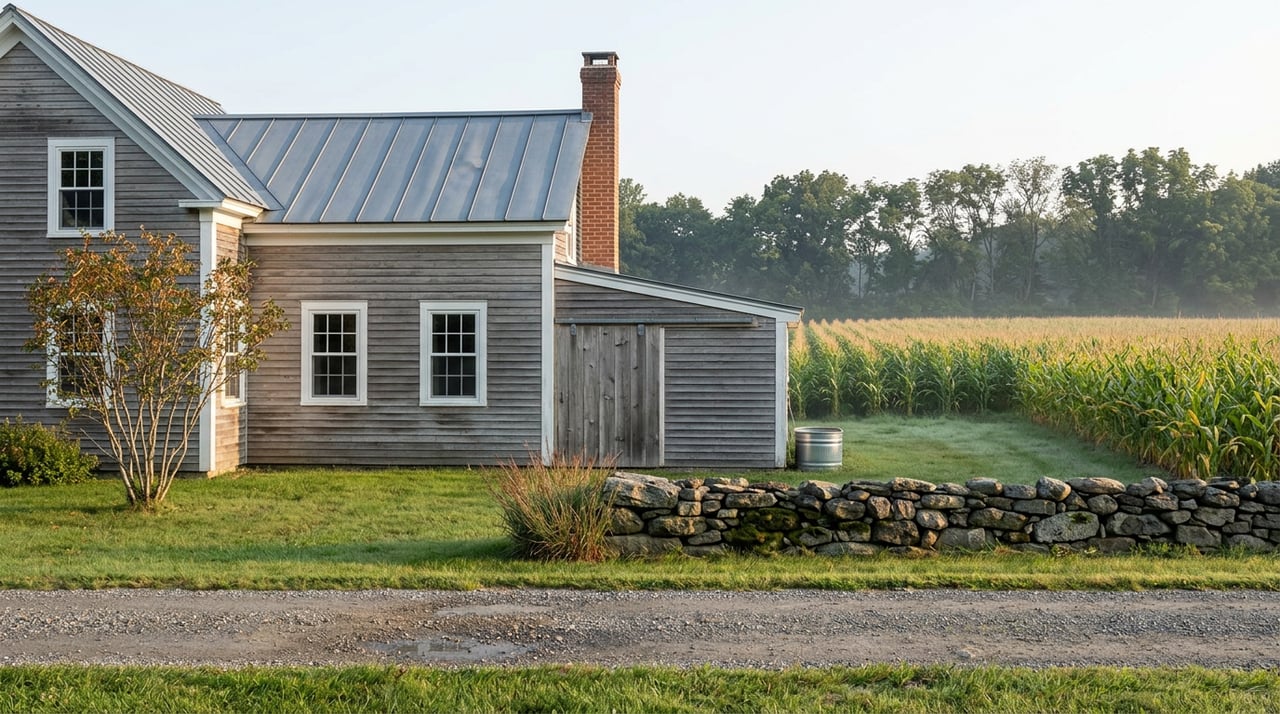
"I'm a land trader," Stefan Soloviev told New York Magazine this summer, describing the more than a thousand acres he has assembled across the North Fork. It's a blunt line from the man who has spent recent years buying up farm parcels along Oregon Road, the stretch that runs through Mattituck and Cutchogue, where land preservation and conservation-subdivision proposals intersect.
If you are pricing land anywhere near that corridor, the number that matters most isn't the acreage total on the listing sheet. It's a single fact buried in the deed: whether anyone has already sold the development rights. The meeting put two land-preservation proposals side by side; Soloviev also has subdivision applications moving through Southold's Planning Board.
Two deals, two price tags, one meeting
At its March 26, 2026 meeting, the Southold Town Board set public hearings on two land preservation deals that landed on the agenda side by side. The town proposed buying development rights on about 30 acres of the 35.92-acre Pellegrini Vineyards parcel on Main Road in Cutchogue for roughly $2.5 million, or about $84,500 per buildable acre. In the same set of hearings, the town and Suffolk County proposed a 50-50 partnership to acquire a 13.65-acre undeveloped, residentially zoned tract near Reydon Shores in Southold, extending to Southold Bay, for $3.6 million, or about $265,000 per acre.
Same town. Same season. Same public hearing cycle. But these were different kinds of transactions: one proposal priced development rights on already-farmed land, while the other priced an undeveloped, waterside parcel. Their figures do not establish a single current price for a development right on the North Fork.
How conservation subdivisions balance homes and farmland
Southold adopted its conservation subdivision code in 2006 as a middle path between two unhappy choices for farmers: sell your development rights outright, or farm the land and forgo the possibility of new homes on the property.
Soloviev's Crossroads Atlantic LLC has two of these applications moving through Southold's Planning Board right now. The smaller one, filed in late February 2026 under the name Cole Harbor Conservation Subdivision, covers roughly 148 acres along Oregon Road spanning Mattituck and Cutchogue. It proposes 13 waterfront lots ranging from about 0.8 to just over three acres each, one 87-acre farmland parcel, and a small beach access lot, on land where about 124 acres are currently farmed. The filing lists a proposed yield of 25 percent and zoning across Agricultural-Conservation, R-80, and Protected districts. As of June 2026, the application was still being reviewed for completeness, with no Planning Board action taken.
The larger one, the 372-acre Colusa Conservation Subdivision spanning Cutchogue and Peconic, would create 47 lots, 18 of them overlooking the Sound, while preserving 267 acres through a sale of development rights to the town and county. Southold's planning director, Heather Lanza, has told the town board it's one of the largest projects the town has seen, and that the plan as filed doesn't match Southold's Comprehensive Plan. She's asked for tighter clustering, fewer roads cutting through farmland, and the 240-acre farm block broken into three to five smaller farms so it stays workable for future growers.
As The Suffolk Times reported, Bob DeLuca of the Group for the East End said the pace of change on the North Fork has left locals with "development PTSD."
The pattern isn't limited to Soloviev. Apollo Global Management CEO Marc Rowan closed on a $23.5 million, 103-acre shoreline parcel in East Marion earlier this year, a record for North Fork land, with about 69 acres of it already protected by Peconic Land Trust easements. Rowan hasn't disclosed his plans for the property. Big buyers are moving on land with mixed or partial rights status well before the public knows what they intend to build, which is exactly the position a smaller buyer can find themselves in too.
What this means if you're the one making an offer
If you're evaluating land near this corridor as an investor or a builder rather than a spectator, the acreage on a listing tells you almost nothing until you answer a short list of questions first.
- Ask what percentage of the parcel is legally buildable today, not what the total acreage suggests. As North Fork Sun reported, Soloviev's own portfolio illustrates the spread: across his roughly 1,119 acres in Southold, Riverhead, and Shelter Island, about 340 acres already carry acquired development rights, while around 862 acres are classified agricultural.
- Check whether rights were sold on the whole parcel or only part of it. A Southold Planning Board filing from January 2026 shows a 34.5-acre farm split between 29.5 acres with development rights already held by the town and 5 acres where the rights remain intact. That kind of split shows up parcel by parcel.
- Remember that agricultural land with sold development rights still goes through Suffolk County's permitting process for anything beyond routine farm maintenance. Chapter 8 of the county code puts the county's Farmland Committee in charge of reviewing structures on rights-restricted land, though it can delegate minor practices like livestock fencing, deer fencing, and irrigation wells to a faster review track.
- Don't assume a filed subdivision application is a done deal. Both Cole Harbor and Colusa were still in early sketch-plat or completeness review months after filing, and Colusa was sent back for redesign before the town would move it further.
None of this means development-rights-sold land is a bad buy. Landowners who sold rights decades ago often kept a working homestead on the property. Robert Schrieber retained a 3.9-acre homestead when the town purchased development rights on the surrounding 31.7 acres of his Oregon Road farm back in 2002, a structure that's common across these older Suffolk County deals. It just means the deed, not the listing description, is where the real answer lives.
A few straight answers
What should I check before building on land with sold development rights? The county's program is built to keep working farms in production, not empty them out, and older deals frequently carved out a residential lot for the farm family even after the rest of the acreage's rights were sold. New construction beyond what's already permitted still has to clear the county's agricultural land review.
Does a filed conservation subdivision application mean the project is approved? No. Filing starts a process, not a guarantee. Colusa was told by the town's own planning director to redesign before it could move forward, and Cole Harbor sat in completeness review for months after its late February 2026 filing.
How do I find out if a specific parcel's development rights have already been sold? Ask directly rather than guessing from zoning alone. Town and county land records, along with the property's Suffolk County Tax Map number, are how you confirm rights status, and it's exactly the kind of record search worth doing before you write an offer, not after.
Land near Oregon Road is being priced and repriced in real time by people who understand exactly which acres carry which rights. If you're weighing a purchase in Mattituck or the surrounding farm belt and want a read on what a specific parcel's deed actually allows, The Principi Team combines Douglas Elliman's reach with hands-on knowledge of construction, zoning, and land use across the North Fork. Contact us before you make an offer, not after.
This article is general information, not legal, tax or financial advice. Consult a qualified professional about your situation.
