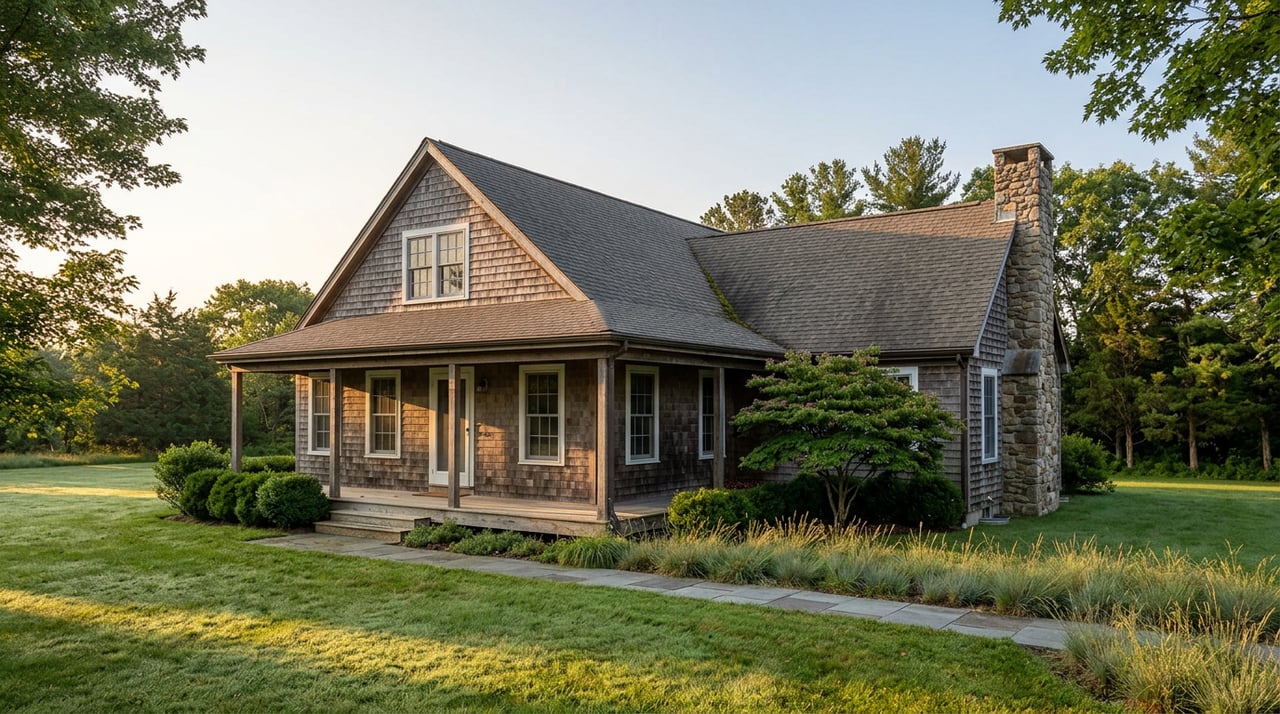
Drive from the Long Island Sound side of Mattituck down toward Mattituck Creek and the bay, and you will not cross a single manhole cover marking a sewer line. Local septic contractors describe Mattituck as the one North Fork hamlet that runs entirely on private wastewater systems, from the creekside cottages near the inlet to the farmhouses set back off Sound Avenue. There is no municipal alternative here. Every gallon of water that leaves a Mattituck home goes into a cesspool or a septic tank buried somewhere on that same lot.
That fact rarely shows up in a listing description. It should, because it sits underneath one of the least understood numbers in a Mattituck real estate transaction: the point at which a renovation stops being a renovation, in the eyes of Suffolk County, and becomes a legal trigger for a wastewater system that can cost double or triple what a straightforward septic swap runs.
Suffolk County Doesn't Care What You're Renovating. It Cares How Much You're Spending.
Suffolk County closed a long-standing loophole on July 1, 2019. Before that date, a homeowner whose cesspool failed could simply install another cesspool in its place. That option no longer exists. Any cesspool replacement today must be, at minimum, a conventional septic system with a tank and a separate leaching structure. A straight swap like that typically runs $10,000 to $20,000 installed.
The rule tightens further for anyone doing more than a repair. Since July 1, 2021, new residential construction and any project the county classifies as "major reconstruction" must install an Innovative and Alternative Onsite Wastewater Treatment System, known as I/A OWTS. These are nitrogen-reducing systems, and the county defines major reconstruction using a specific threshold: renovation work that costs 50 percent or more of the home's market value.
That threshold is the number that matters. It has nothing to do with square footage, bedroom count, or how outdated the kitchen looks. It is a straight comparison between what you plan to spend and what the county's health department believes the house is worth. Cross that line and the project is no longer a simple upgrade. It becomes a full I/A OWTS installation, typically running $19,000 to $25,000, with some installations reaching $40,000 depending on site conditions and system size. Owners also take on an ongoing service contract, usually $300 to $500 a year, because these systems require regular maintenance to keep performing.
Two Renovations, Two Very Different Wastewater Bills
The gap between a routine septic replacement and a mandatory I/A OWTS installation is wide enough to reshape a renovation budget on its own.
| Simple Cesspool Failure | Major Reconstruction (50%+ of home value) | |
|---|---|---|
| Trigger | Existing cesspool fails or is voluntarily replaced | Renovation cost meets or exceeds half the home's market value |
| Required system | Conventional septic tank and leaching structure | Nitrogen-reducing I/A OWTS |
| Typical installed cost | $10,000 to $20,000 | $19,000 to $40,000 |
| Ongoing cost | Routine pumping every 2 to 3 years | Annual service contract, roughly $300 to $500 |
| County filing | Registration with SCDHS, often no fee | Formal permit application, $200 to $500, 2 to 4 week review |
The difference is not a rounding error. It is the kind of gap that can quietly consume a renovation contingency fund if a buyer discovers the threshold only after signing a contractor's proposal.
Why the Halfway Line Shapes the Decision Before the Shovel Goes In
Here is the part that matters more than the dollar figures themselves. Once a buyer or owner understands that the 50 percent line exists, it starts influencing how a renovation gets scoped, not just how it gets paid for.
A homeowner planning a $180,000 gut renovation on a house appraised at $400,000 sits comfortably under the threshold. The same owner adding a primary suite, finishing a basement, and redoing the kitchen on a $320,000 house might find the project creeping past that halfway mark almost by accident, especially once change orders and site work get added in. At that point, the wastewater system stops being an afterthought and becomes a line item that can rival the cost of a renovation phase.
This is why some Mattituck renovations get sequenced deliberately: a kitchen and bath refresh this year, a structural addition two years later, each staying under the reconstruction threshold on its own. It is also why a buyer comparing a move-in-ready Mattituck property to a fixer-upper needs to price the septic question into the comparison, not treat it as a detail to sort out after closing. The purchase price and the renovation estimate might look similar to a comparable house in Cutchogue or Southold, but if one property's project design happens to land on the wrong side of that percentage line, the total cost of ownership does not match the listing price at all.
The Money the County Puts Back on the Table
Suffolk County built a financial offset for exactly this problem. The Septic Improvement Program, run through the county's Reclaim Our Water initiative, offers a base grant of up to $10,000 toward an I/A OWTS installation, with an additional $10,000 available depending on system type and household income, and New York State layering on another $10,000 through its own Septic System Replacement Program. Combined, an eligible homeowner can see up to $30,000 in grant funding applied directly to the vendor after installation, not as a reimbursement the owner has to front. Suffolk County also connects qualifying homeowners to gap financing through low-interest loans to cover the difference between the grant and the final contract price.
Priority scoring favors exactly the kind of geography Mattituck has in abundance: parcels near a sole-source aquifer, a tidal creek, a bay, or Long Island Sound. A property near Mattituck Creek or along the Sound shoreline is the profile the county's own criteria were built around, which makes the grant program worth investigating before assuming the full cost falls on the buyer. Details on eligibility and the current application process are posted on Suffolk County's Septic Improvement Program page.
The demand for this kind of design work is real and local. Firms that specialize in I/A system engineering, including at least one architecture practice with an established Mattituck client base, exist specifically because so much of the North Fork's housing stock is working through this transition at once.
What Shows Up at the Lender's Desk, Regardless of Renovation Plans
Separate from any renovation math, a septic question surfaces in nearly every Mattituck sale the moment a lender gets involved. Most buyers financing a purchase will not close without a cesspool inspection or certification, even when it is not strictly required by county law, because lenders want documentation that the system works before they fund the loan. FHA and VA loans carry their own specific septic requirements, and a system that does not meet those standards can stall a closing regardless of how motivated both parties are to finish the deal.
Sellers who gather pumping records, inspection history, and any past permits before listing put themselves in a stronger negotiating position. Buyers who ask for that documentation early, rather than waiting for the inspection period, avoid the scramble that catches people off guard when a bank requests paperwork that does not exist yet.
Before You Write an Offer on a Dated Mattituck Property
A few questions are worth raising with your agent and a licensed local contractor before you finalize a renovation budget on a Mattituck fixer-upper:
- What type of system is currently on the property, and how old is it?
- Are there pumping or maintenance records, and if not, can one be arranged before the inspection period closes?
- Based on the scope you're planning, does the projected renovation cost approach half of the home's appraised value?
- Is the parcel close enough to the Sound, the bay, or a tidal creek to qualify for priority consideration under the county's grant program?
- If a full I/A OWTS installation becomes necessary, has that cost been built into the total project budget, not treated as a contingency?
None of these questions require a final answer before you make an offer. They do require an honest look before you commit to a renovation number that assumes the wrong wastewater system.
A Short FAQ
Does every Mattituck home need a new septic system before it can sell? No. A functioning existing system, even an older cesspool, can stay in place through a sale. The upgrade requirement is tied to system failure or to renovation scope, not to the sale itself.
Can I avoid the I/A OWTS requirement by phasing my renovation? Phasing a project so that each stage stays under the 50 percent threshold is a legitimate way some Mattituck owners approach larger renovations. It is worth discussing the sequencing with your contractor and, where relevant, the county before finalizing scope.
Is the septic grant only for people who are already renovating? No. The Septic Improvement Program is open to qualifying homeowners replacing a failing cesspool as well as those doing larger projects, and priority scoring is based on environmental factors like proximity to water, not on whether a renovation is underway.
Mattituck's private septic reality is not a warning sign. It is simply the terrain the hamlet's housing stock sits on, and understanding it early turns a possible closing-week surprise into a budget line you priced in from the start. The Principi Team works through exactly this kind of property-specific detail with buyers and sellers across the North Fork, from what a system upgrade actually costs to what a renovation scope should look like before an offer goes in. Contact us to talk through what a specific Mattituck property, fixer-upper or otherwise, actually requires before you buy.
